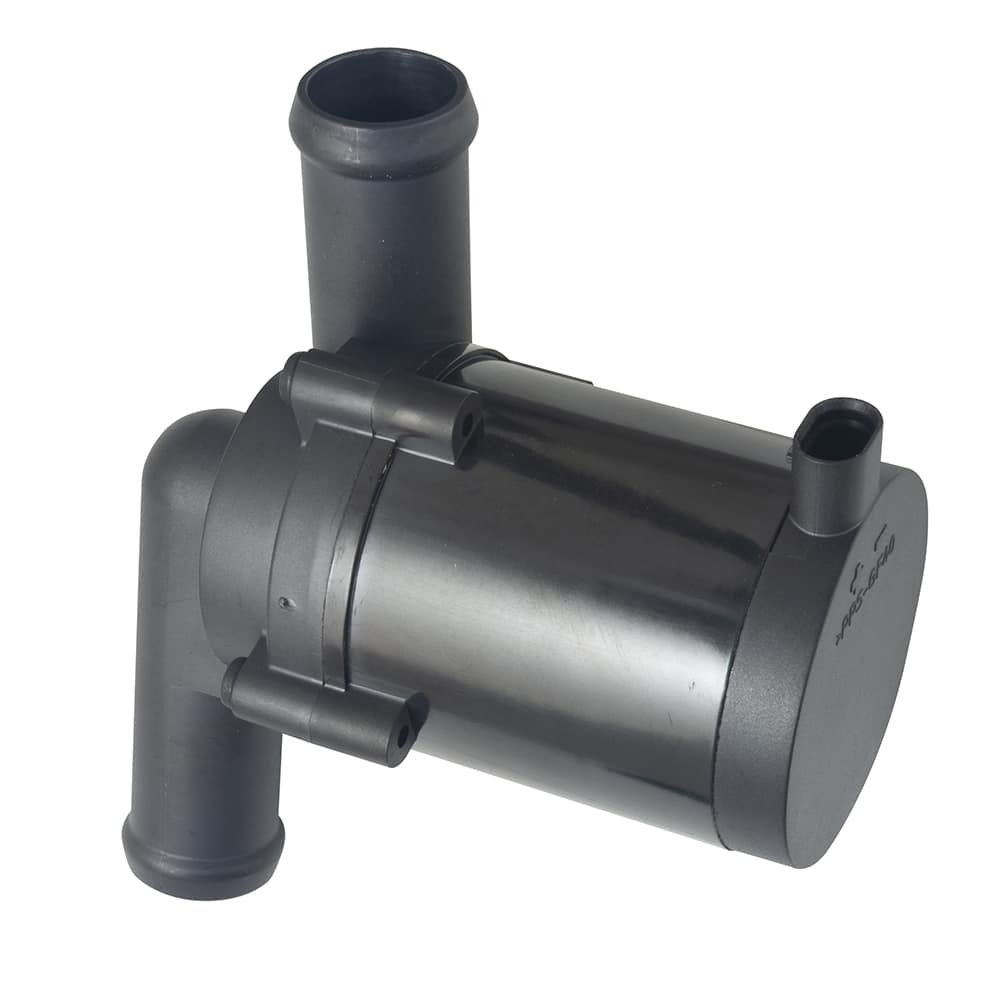
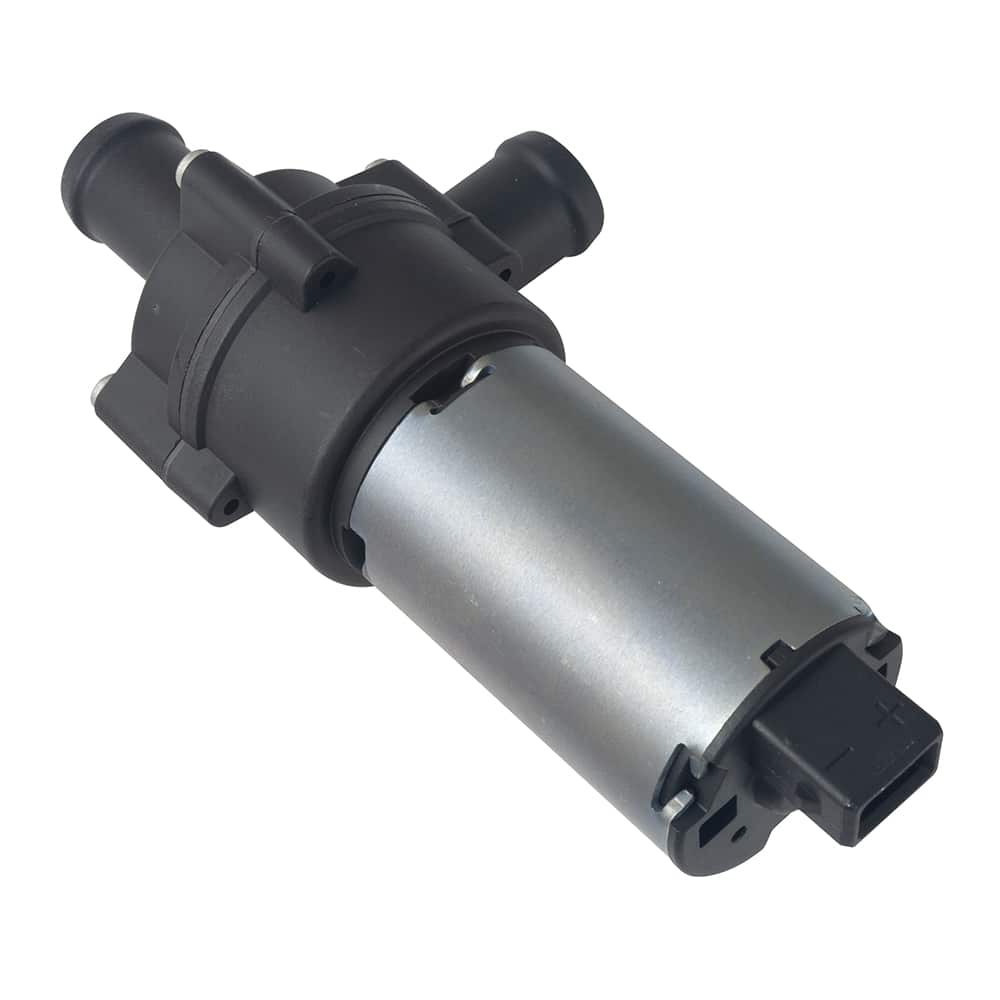
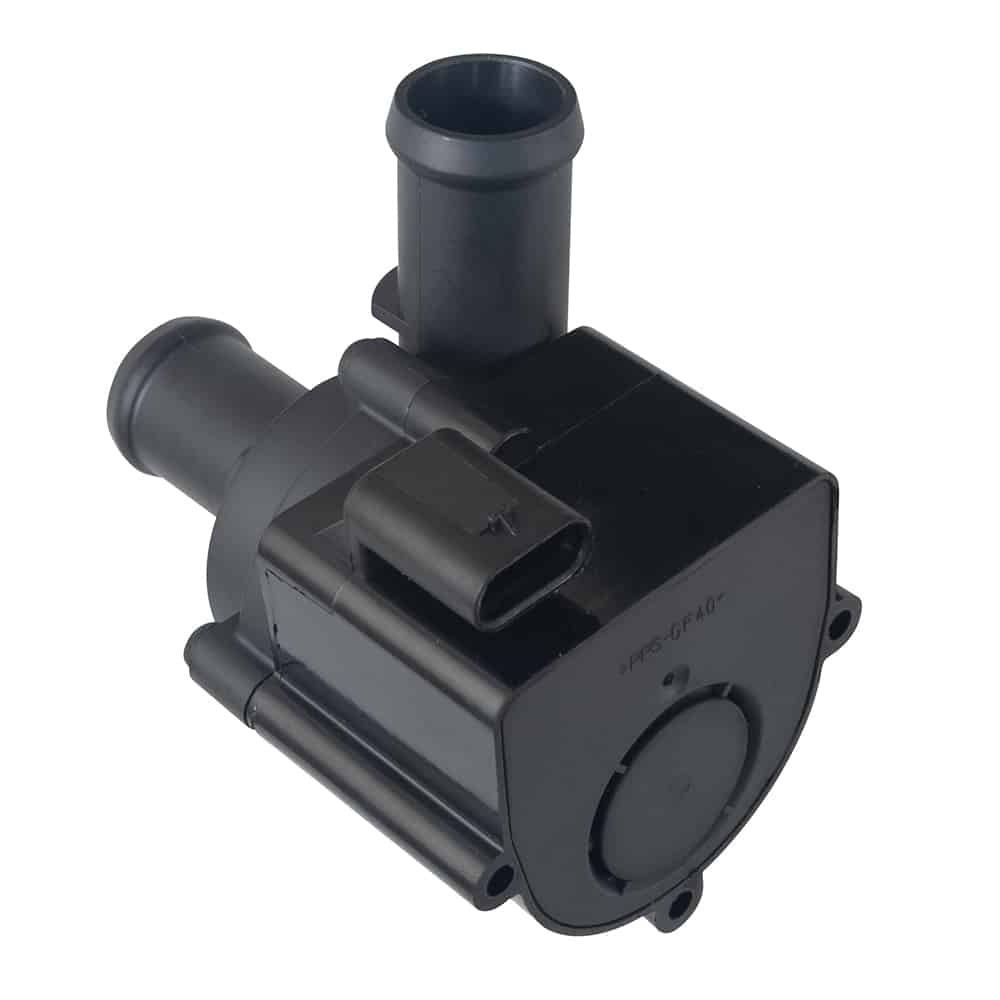
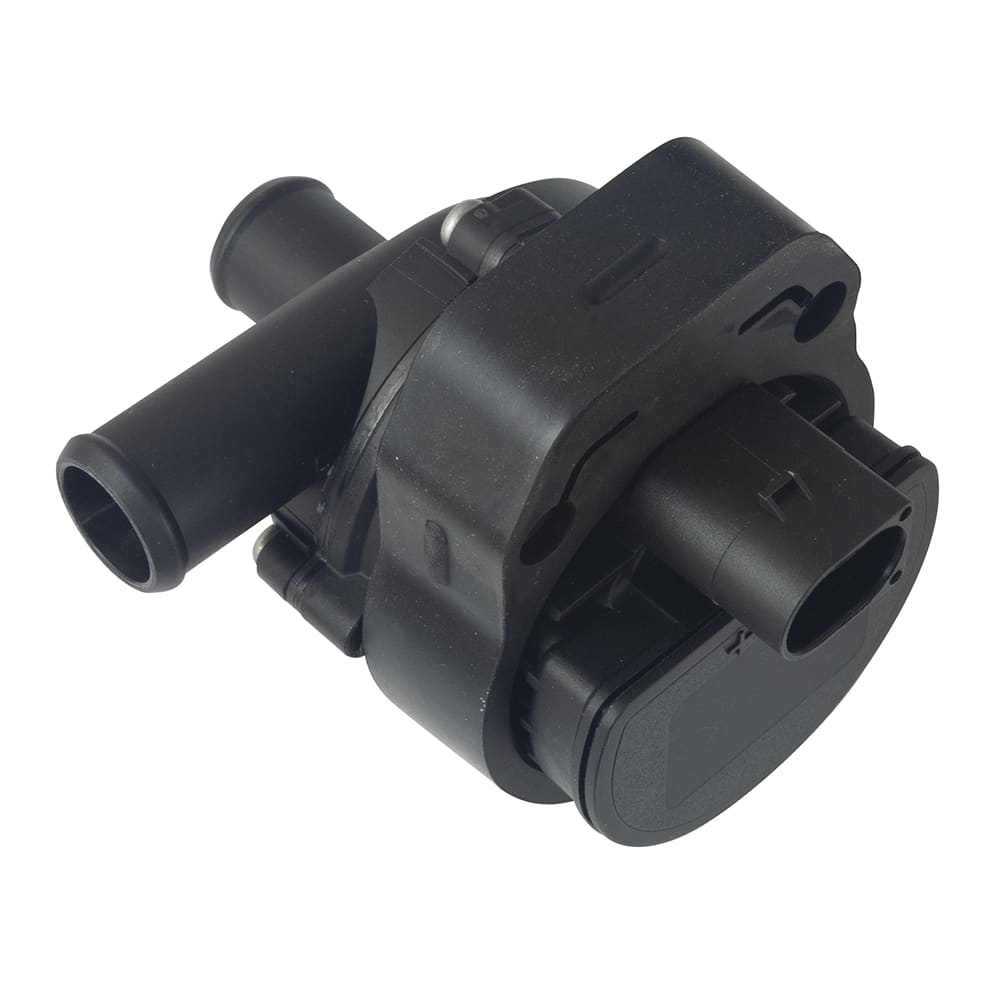
Auxiliary electric water pumps are components designed to ensure efficient coolant circulation in different areas of the vehicle, independently of engine speed. Their main function is to maintain coolant flow in situations where the mechanical water pump is not effective, such as during idling, in start-stop systems, or when the engine is switched off.
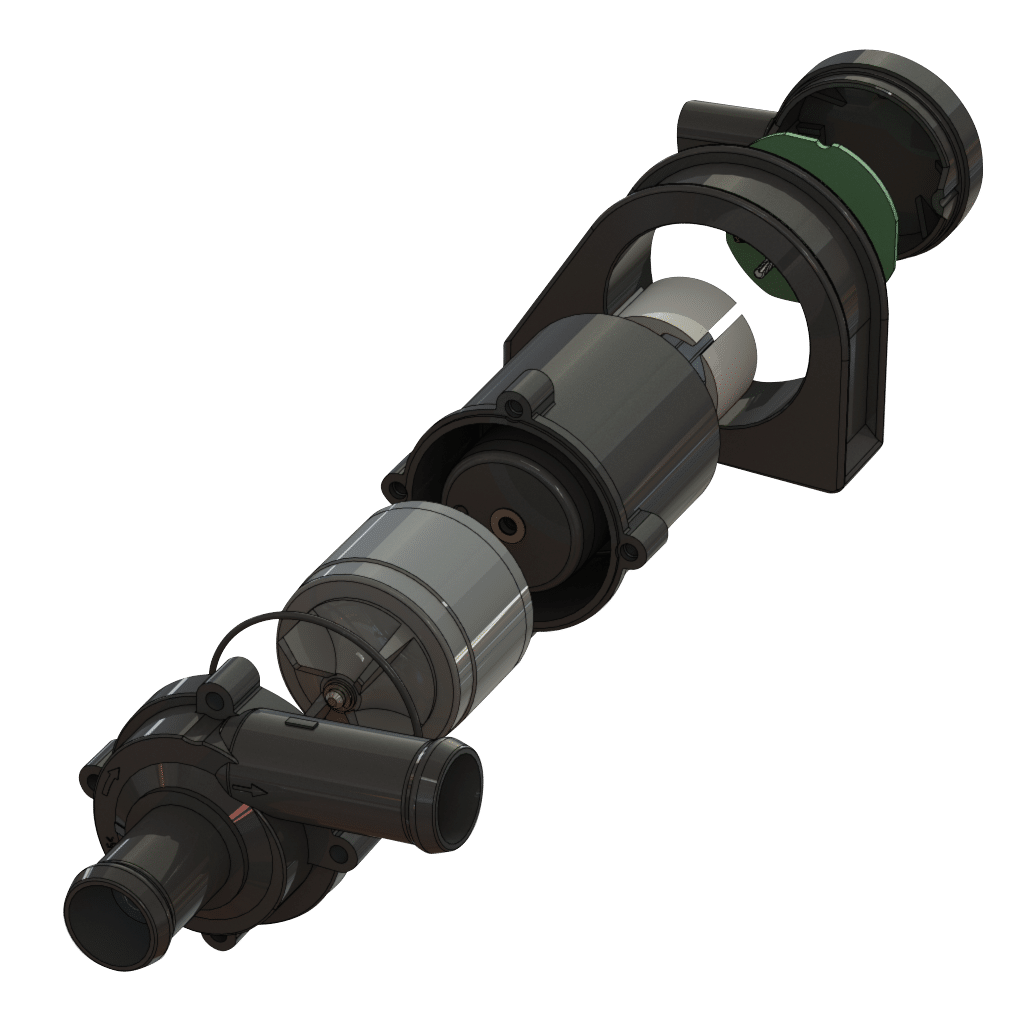 This type of pump is particularly relevant in turbocharged vehicles, as well as in hybrid and electric models, where it also manages the thermal control of critical components such as the inverter and battery pack. Thanks to its electric drive, it enables precise and efficient regulation of coolant flow according to the system’s thermal demand.
-
Drive type: Electric, independent of the engine
-
Application: Auxiliary thermal management (turbocharger, heating, inverter, batteries)
-
Control: Activation via electronic or PWM signal from the ECU
-
Typical location: Auxiliary circuits of the cooling system
-
Configuration: Available for internal combustion, hybrid, and electric vehicle systems
-
Number of pumps per vehicle: Up to 4 in modern applications
Note: Specifications may vary depending on the cooling system design and the vehicle manufacturer’s thermal requirements.
The general structure of an auxiliary electric water pump consists of:
-
Brushless electric motor: ensures quiet operation, reduced friction, and a longer service life.
-
Rotor/impeller: drives the coolant through the system.
-
Housing: typically made of polymer or aluminium alloy, resistant to high temperatures and chemical agents.
-
Inlet and outlet connections: designed to integrate with the vehicle’s coolant circuit.
-
Integrated control electronics: in some models, allows real-time flow adjustment via a PWM signal.
-
Internal sealing: using specific technical seals to prevent leaks and withstand continuous contact with hot coolant.
Auxiliary water pumps are exposed to demanding thermal and electrical conditions, so their most common failures are usually caused by:
-
Fatigue of internal electronic components: failures in the control board or motor due to overloads or voltage spikes.
-
Dry running: if the system contains air bubbles or insufficient coolant, it can cause premature wear or rotor blockage.
-
Circuit blockages: debris or deposits can block the impeller or reduce coolant flow.
-
Coolant leaks: caused by deteriorated seals or damage to the housing.
-
Connection errors or PWM signal failure: preventing proper activation or modulation.
In vehicles equipped with a diagnostic system, the engine control unit may store fault codes when a malfunction is detected.
The installation or replacement of an auxiliary electric water pump must be carried out according to the vehicle manufacturer’s instructions. General best practices include:
-
Disconnect the battery before working on the electrical circuit.
-
Verify that the new pump is compatible with the vehicle’s specific cooling system.
-
Properly bleed the cooling system to remove air and prevent dry running.
-
Check the electrical connections and flow direction before completing the installation.
-
Check the condition of hoses, clamps, and mounting points.
-
In some models, calibration or adaptation via electronic diagnostics may be required after installation.
Incorrect installation can lead to overheating, intermittent operation, or reduced thermal performance of the vehicle.