
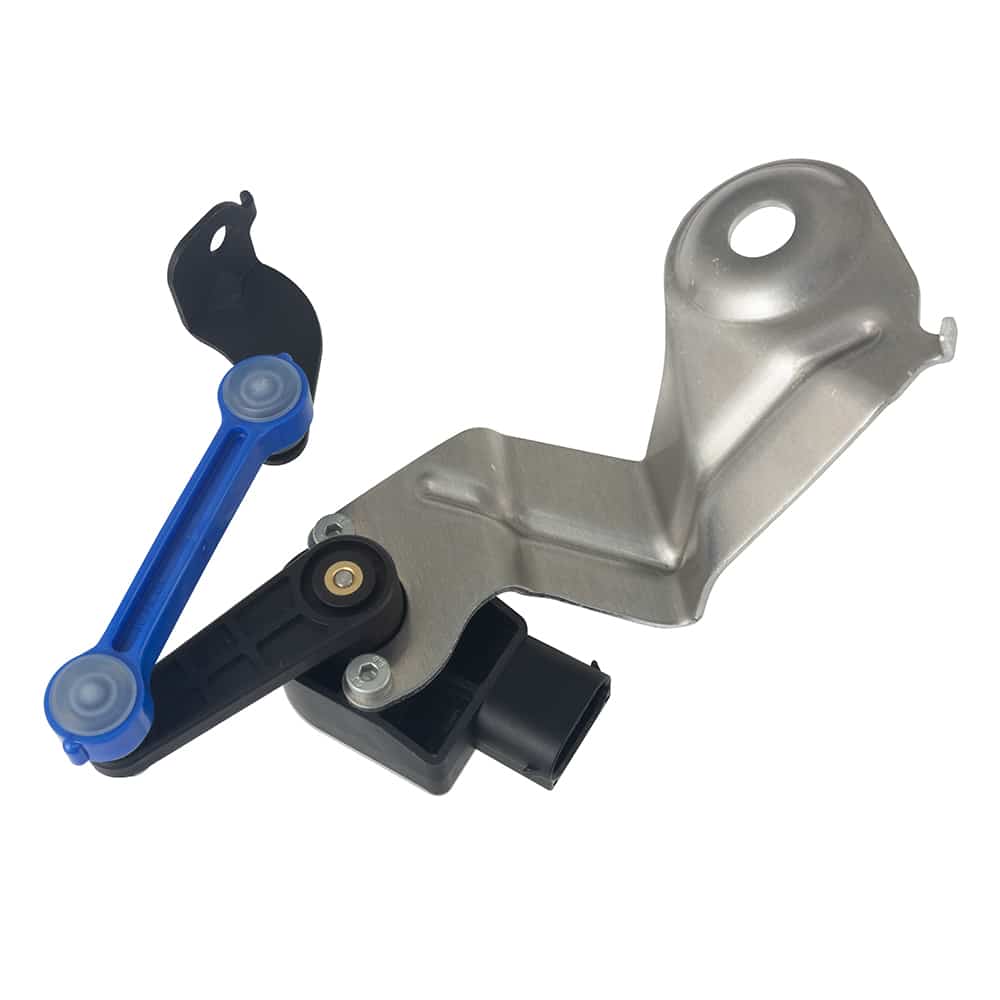
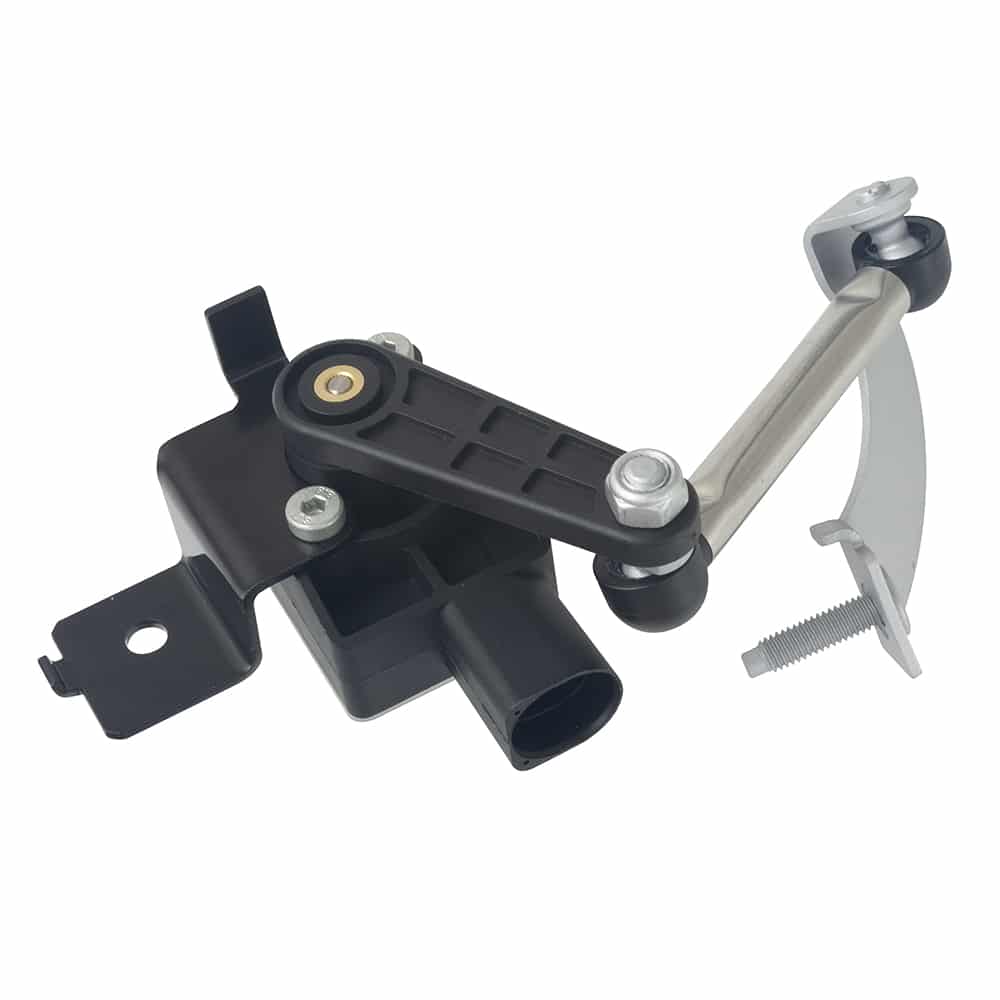
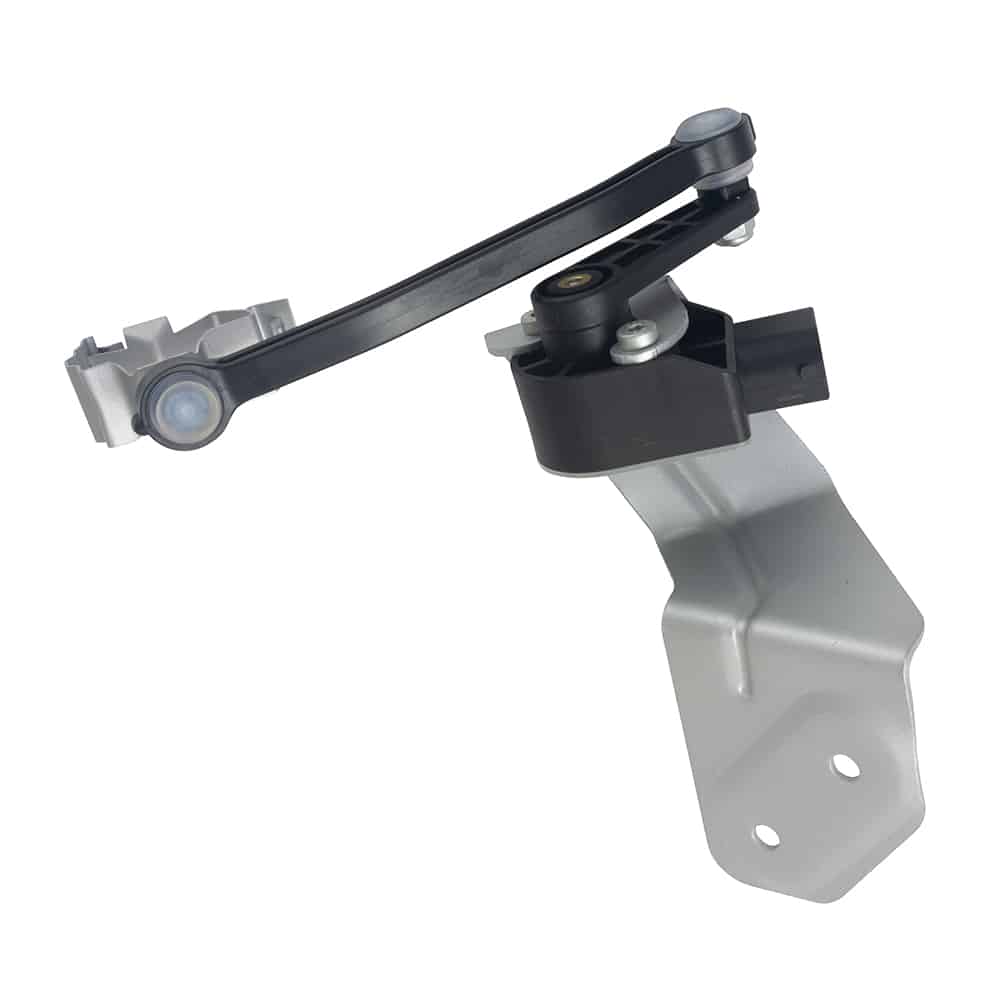
Headlight range control is an essential system for ensuring correct visibility at all times, preventing glare for other drivers and providing optimal road illumination. This system, particularly important in vehicles equipped with xenon and LED headlights, incorporates advanced technologies such as the inductive vehicle level sensor and the headlight range control unit with integrated sensor.
Description
Technical data
Composition
Cause of failure
Mounting
Description
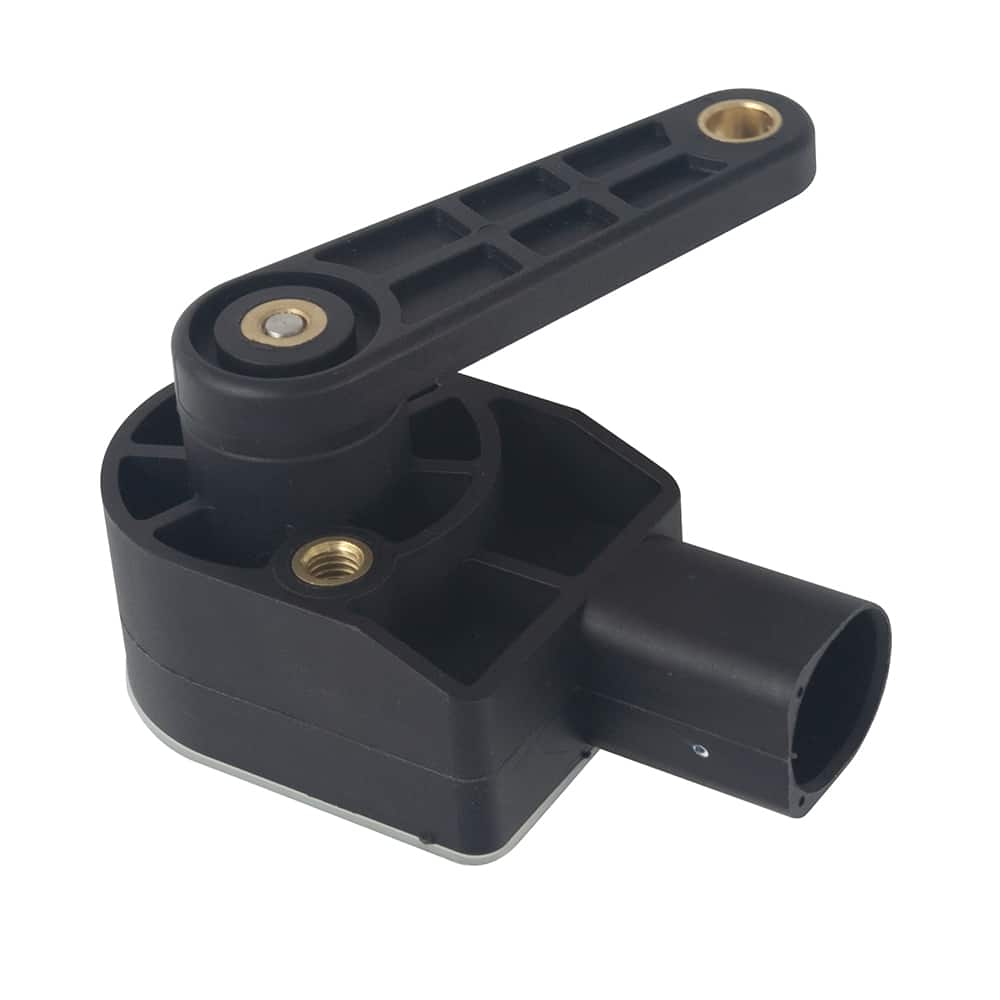
Height control sensors are key components in the automatic lighting and adaptive suspension systems of modern vehicles. Their main function is to accurately measure the relative height of the vehicle body in relation to the axles, allowing the headlight angle to be adjusted in real time (preventing glare) and ensuring safe and comfortable driving, especially under varying load or road conditions.
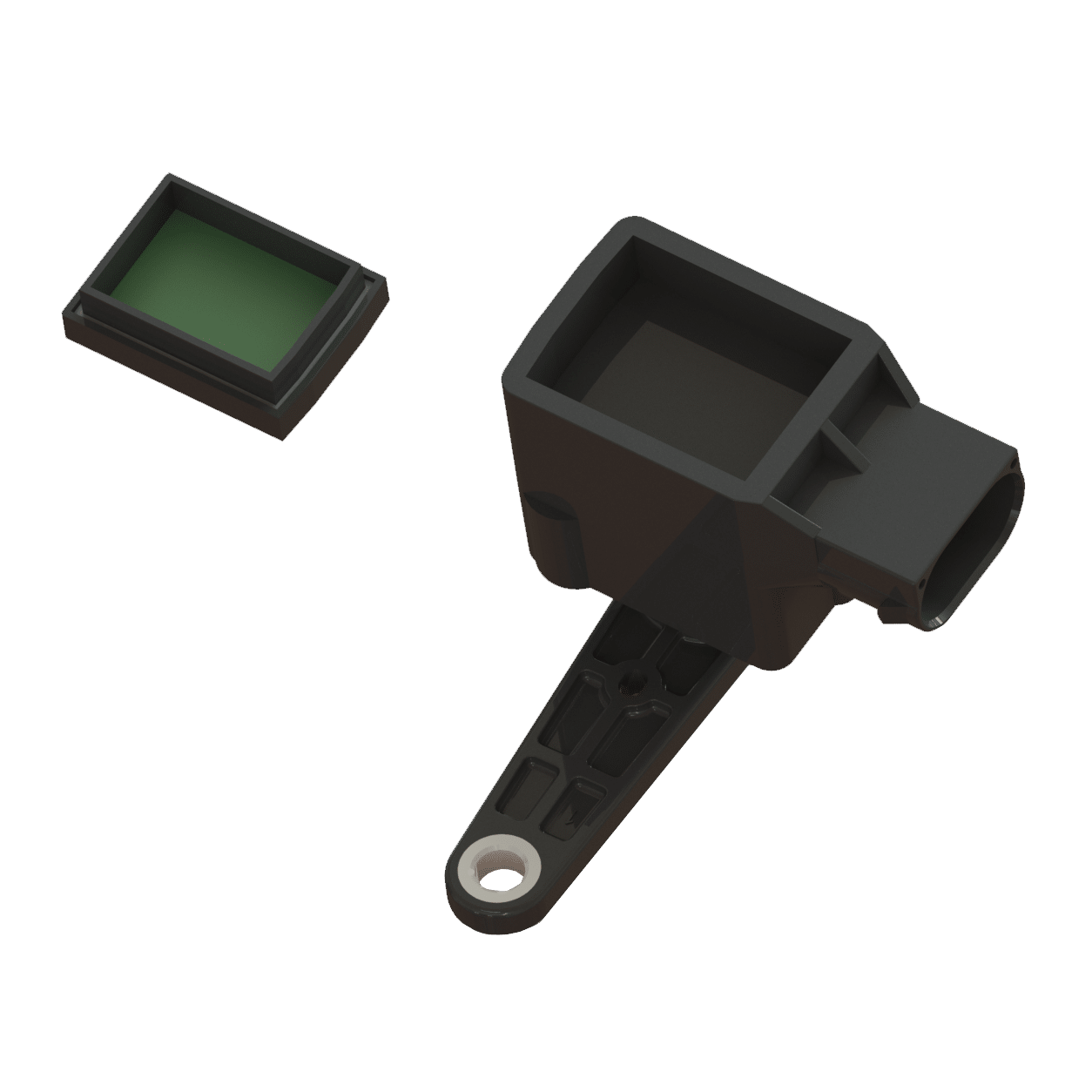
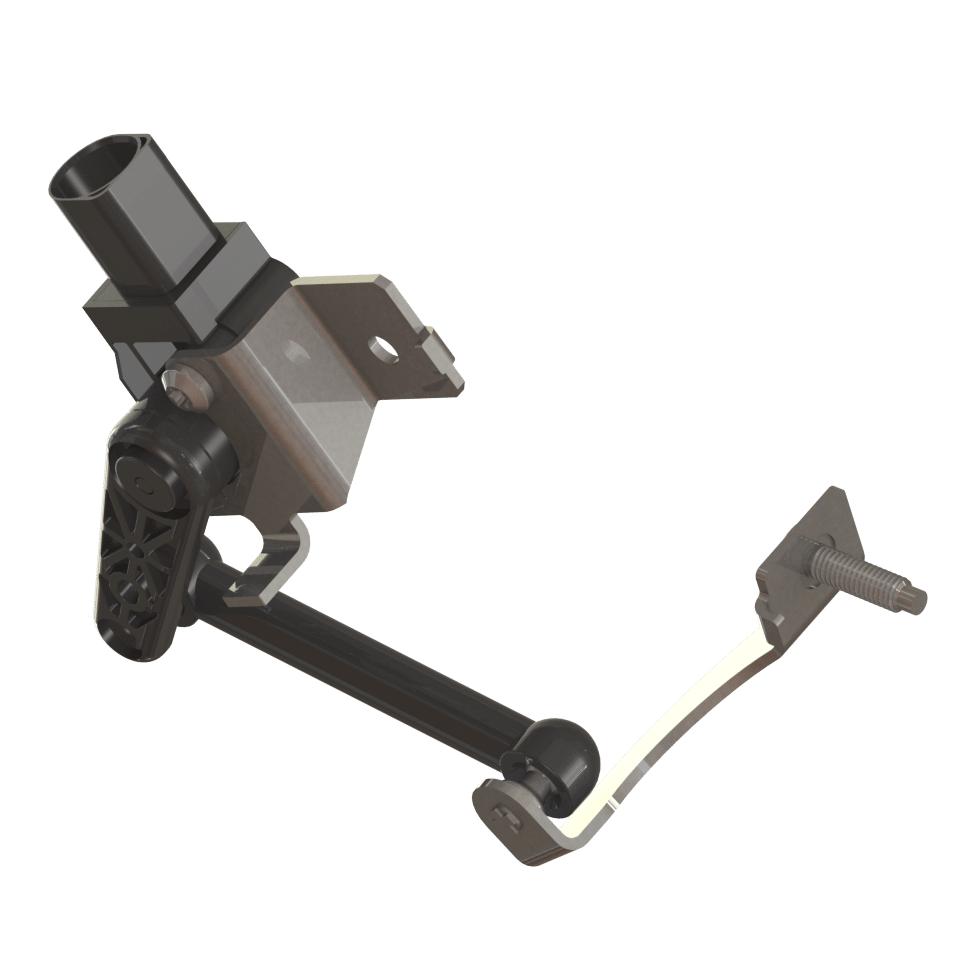 These sensors are installed on the chassis and connected to a linkage attached to the suspension arm. When they detect a change in the vehicle’s inclination or height, they send a signal to the electronic control unit (ECU), which automatically adjusts the headlight position or suspension level.
Thanks to their contactless technology and compact design, they provide friction-free operation, greater durability and easy integration with the vehicle’s other systems.
The height control sensors developed by FAE are based on contactless inductive technology, enabling precise angular measurements through the generation of stable PWM signals. This technology ensures high reliability, even under intensive operating conditions or in harsh environments, as required in automotive applications. Some versions integrate the electronic control unit directly into the axle sensor, providing a compact and efficient solution for headlight range control in vehicles equipped with halogen, xenon or LED headlights.
Technical data
– Technology: Inductive sensor or non-contact angular sensor
– Signal type: Analogue signal proportional to the angle of rotation
– Supply voltage: 12 V
– Measurement range: 2 V to 11.2 V depending on the angle of the arm
– Location: Mounted on the chassis, connected to the front or rear axle
– Communication: Signal sent to the ECU for headlight adjustment or air suspension compressor control
– Installation: Secured with screws and a connecting rod to the suspension arm
– Calibration: Requires an adjustment procedure using a diagnostic tool after installation
Types of Sensors Available
– Inductive vehicle level sensor: Consists of a printed circuit board with several coils that generate an electromagnetic field. It detects the angle of the suspension lever with high precision, providing a proportional analogue or PWM signal.
– Headlight range control unit with integrated sensor (SIECU): Combines the sensor and electronic control in a single component. Particularly useful in compact vehicles, it simplifies installation, improves reliability and optimises space.
Composition
– Sensor body with integrated measurement electronics
– Articulated connecting rod (limited rotation)
– Sealed electrical connectors
– Weather-resistant housing (moisture, gravel, vibrations)
– Compact sealed unit to prevent dirt or water ingress
Cause of failure
Failures in height control sensors can affect both the suspension and the automatic headlight range control system, causing noticeable driving anomalies and error warnings. The most common causes and symptoms are detailed below:
Sensor Failures
- Wear caused by external factors: As they are installed on the exterior of the vehicle, they are exposed to moisture, water, salt, gravel and dirt, which can damage the internal electronics or connectors.
- Linkage rod breakage: Incorrect handling during suspension maintenance (without disconnecting the sensor) can cause mechanical overload and break the sensor arm.
- Signal failure: If the sensor outputs a constant signal with no variation despite movement, this may be due to an internal fault or poor electrical contact.
- Calibration or connection failure: An incorrectly calibrated sensor after installation, or poor contact with the control unit, can cause system malfunctions.
Symptoms in the Headlight Range Control System
- Glare to other drivers: This occurs when the system fails to correctly adjust the headlight angle following changes in vehicle load.
- Fixed headlight angle: Indicates that the system is not receiving the necessary information from the sensor to adapt to the vehicle’s conditions.
- Warning light on the instrument panel: Indicates a fault detected in the automatic headlight range control system.
- Headlight beam oscillation: Unstable movement of the light beam caused by incorrect or intermittent sensor readings.
- Communication failure with the ECU: This may be caused by electrical problems, broken wires or damage to the control unit.
Mounting
-
Location: Install the sensor on the chassis, with the linkage rod connected to the suspension arm (front or rear axle depending on the vehicle design).
-
Precaution during disassembly: Before carrying out work on the suspension or shock absorbers, disconnect the sensor to avoid forcing the sensor arm.
-
Calibration after replacement: Once installed, the sensor must be calibrated using diagnostic equipment to ensure correct system operation.
-
System verification: Check that the sensor generates a variable signal (2 V to 11.2 V) depending on the angle. If the signal remains constant, this may indicate an internal fault.
-
Periodic inspection: Check the condition of the connector, linkage rod and housing for possible damage or accumulated dirt.
